
Soundcheck Your Pages


I was talking this week with a musician who’s crossing over into books. We got to that familiar moment where they said, “I can hear when a note is wrong. Why can’t I hear it on the page?”
And it hit me, again, how little separates crafts like writing, making music, creating recipes. I’ve interviewed countless artists and authors for over the last 20 years: Emily Henry, Robert Plant, Peter Frampton, Jodi Picoult, Alice Cooper, 311, Nicholas Sparks, Dolly Parton, Journey, Metallica, Deep Purple, Mitch Albom, Lauren Groff, to name a few. And the patterns never really change; the work is the work.
So here are three things famous musicians have told me about writing that I keep taped to my brain:
Led Zeppelin’s Robert Plant:
“If I don’t write something substantial that is relevant to my own time and life, then I don’t record it.”
Translation for writers: don’t chase what sells. Chase what’s true for you right now. Relevance isn’t trend. It’s honesty with a pulse.

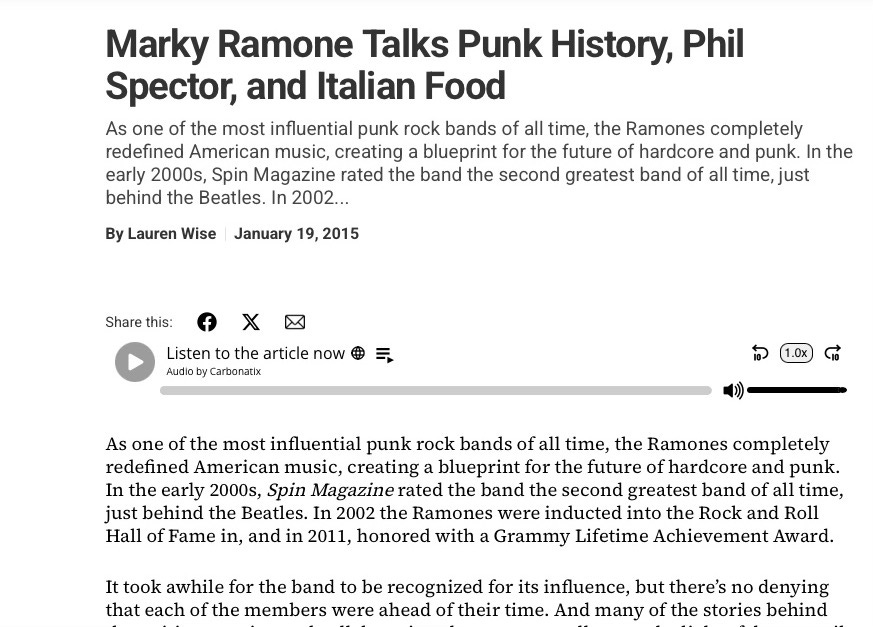
Marky Ramone of The Ramones:
“You just have to be careful to not sound like anyone else, because originality is the thing that really stands out, and that’s how you’ll get noticed.”
Translation for writers: Your voice is your marketing. The more specific you are, the more unforgettable you become.
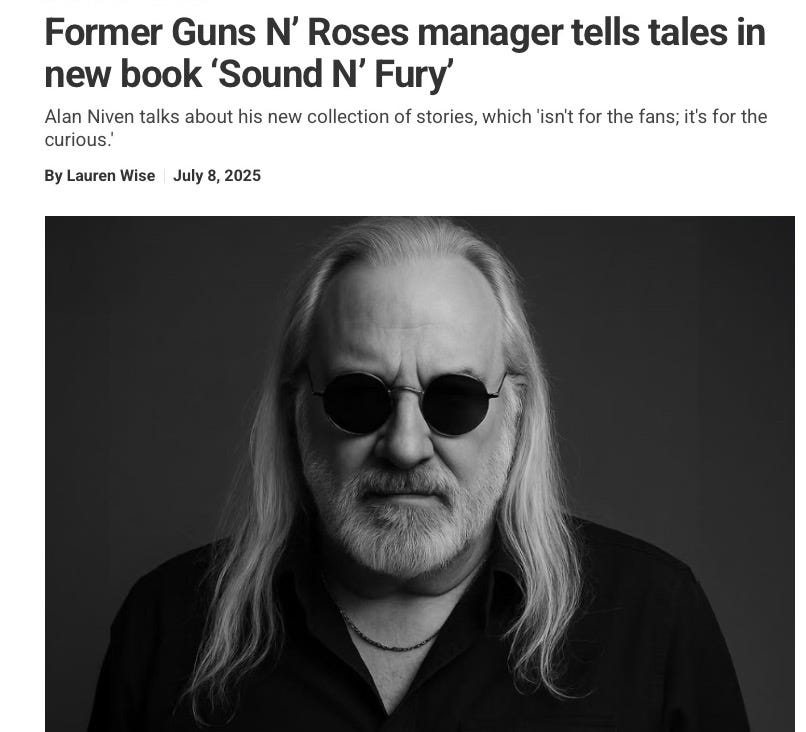
Famous Manager of Guns ’N Roses, Great White; author Alan Niven:
“Editing anger into empathy is hard. Managing bands was the same. It was 24/7 life, not a job.”
Translation for authors: Revision is emotional labor. Not just line fixes. You’re shaping temperature, meaning, and human truth.
So here’s the practical takeaway. If musicians soundcheck their notes before they step into a room full of people, writers should soundcheck their pages before they ask readers to trust them.
Not vibes. Not “it feels fine.” A real test you can run.
The Soundcheck
Alright, so now, pick one chapter, one scene. Don’t start with the whole book. You’re not mixing an album today. You’re just checking the levels.
Read it out loud.
Not in your head, out loud. Your mouth will tell you the truth your eyes politely ignore.
Then as you read, mark two things:
Lines that land: Note when you feel a click, a sting, a laugh, a chill. Something you may want to say again because it has rhythm and intention.
Lines that die: Maybe you speed up, or maybe you drift. You can hear yourself explaining. You lose the thread or run out of breath. The sentence might be “fine” but it isn’t alive.
That’s your first data set. You’re not judging yourself—you’re listening.
Now add one hook line per chapter
After the read-aloud pass, go back and add one hook line per chapter. Not a cliffhanger or gimmick. Just a line that pulls focus. Maybe make it a confession or a contradiction . . . a strange detail. A sentence that says, stay with me.
If your chapter opens gently, the hook line can sit later. If the chapter opens hot, the hook line can be a quieter twist. Either way, give the reader one moment that grabs.
Then do a volume pass
Most drafts don’t have a “bad writing” problem. They have a volume problem. They stay at the same intensity too long.
Do a simple pass like a setlist:
fast → slow → fast
Fast is momentum: decisions to pressure to forward motion.
Slow is intimacy: precision to breath.
Fast again is consequence, turn, escalation.
This is how you make voice measurable. Not by polishing every sentence, but by controlling the pulse. If it sings out loud, it sticks on the page.
And yes, Stephen King is a good companion for this. On Writing isn’t precious. It’s practical. It reminds you that your job is to make the reader feel something and keep them moving.
If you’re drafting right now, consider these 3 questions
What am I still learning in this book
What is substantial and true to my life and time
Where am I accidentally sounding like everyone else
If you try the soundcheck, tell me what you found. What line landed hardest? What section died on the mic? What did you cut, and instantly felt the whole scene breathe?
Want more of these artist-to-craft crossovers? I’ve got stories.